Proven Good Parenting Tips That Actually Work Mid-Meltdown
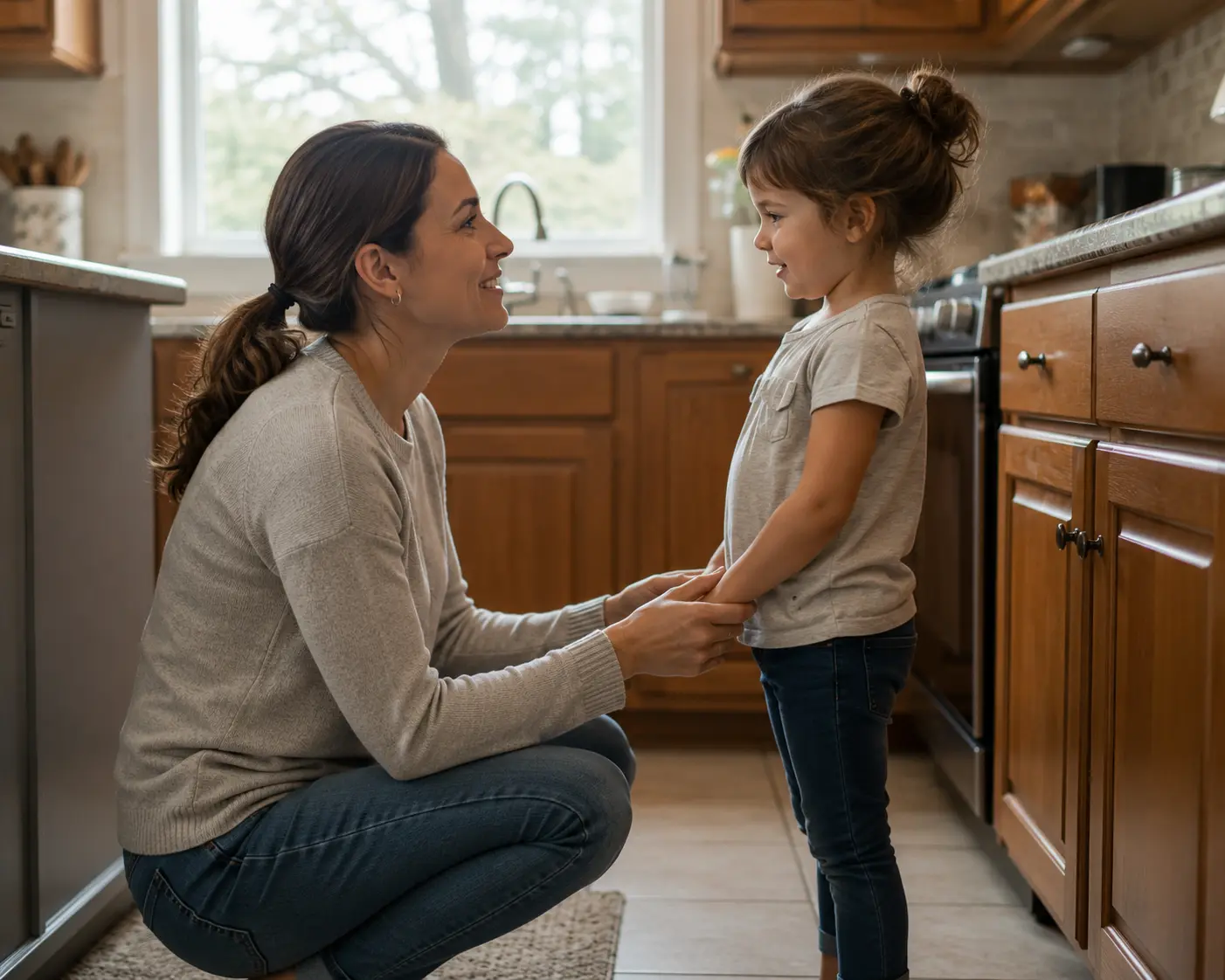
A four-year-old who throws a plate across the kitchen isn’t defying you — she’s testing whether the rules hold when she’s furious. That single moment holds the whole challenge behind every list of good parenting tips: how do you correct behavior without damaging the bond that makes correction possible in the first place? Most parents don’t need more theory on child development. They need good parenting tips that work in the middle of a meltdown, at the dinner table, in the car, at bedtime. Below are four good parenting tips that real families use, with real examples of how they play out. Good Parenting Tips: Set Bulletproof Rules Before the Storm Hits Discipline falls apart when parents invent the rule in the heat of the moment. A father named Ray learned this after months of yelling “no hitting!” mid-tantrum, only to watch his son hit again the next day. He switched tactics: every Sunday night, he sat his son down for two minutes and named one house rule for the week, like “we keep our hands to ourselves” or “we ask before we take a toy.” He said it calmly, before any conflict existed, and he repeated it at breakfast. Within three weeks, the hitting dropped. The rule wasn’t new information delivered in anger; it was something the child already knew and could recall even when upset. Good parenting tips almost always start here: state the expectation when everyone is calm, not when everyone is already yelling. This works because a child’s brain under stress can’t process a new instruction — it can only respond to something already stored. A mother named Priya applies the same idea to screen time. She doesn’t announce “no more iPad” the moment she wants to leave the park; she sets the limit at home, the night before, so her son hears “we leave after fifteen more minutes” as a reminder, not a surprise attack. Replace Punishment With Game-Changing Natural Consequences Punishment stops behavior for a moment. Consequences teach a lesson that lasts. A mother named Denise stopped taking away her son’s bike every time he left it in the driveway overnight. Instead, she let the natural result happen: one morning, it rained, and the bike seat was soaked. He rode it anyway, uncomfortable and annoyed, and he never left it out again. She didn’t lecture him; the wet seat did the teaching. Contrast this with an approach many parents fall into: grounding a teenager for a week because he skipped homework once. The punishment feels proportional to the parent’s frustration, not to the actual problem, and teenagers notice that mismatch immediately. It breeds resentment instead of reflection. Good parenting tips that actually change behavior tend to link the consequence directly to the action. A child who refuses to eat dinner doesn’t get dessert — not because dessert is a bargaining chip, but because dessert follows a meal. A child who loses a toy because he threw it across the room earns it back after a day, once he demonstrates he can hold it without throwing it. The child experiences cause and effect instead of parental anger, and that distinction changes how children internalize rules. Repair the Relationship After Every Conflict — Every Single Time Every disciplinary moment creates a small rupture. What determines whether a child grows up secure or anxious isn’t whether the rupture happened — it’s whether someone repaired it. A mother named Angela describes a rule she follows after every timeout: once her daughter calms down, Angela crouches to her eye level and says, “I still love you. That behavior wasn’t okay, but you’re not in trouble anymore.” She doesn’t skip this step even when she’s exhausted. Kids who don’t get this repair often carry the discipline as evidence that the relationship itself is unstable. A father named Tom noticed his son flinching and going quiet for hours after every correction, until Tom started ending each disciplinary conversation with a hug and a specific compliment — “you calmed yourself down faster than yesterday, and I noticed.” Within a month, his son stopped shutting down and started coming to Tom to talk through what happened. Repair doesn’t mean erasing the consequence. The bike still needs cleaning; the timeout still happened. Repair means the child walks away knowing the relationship survived the correction intact. This single habit separates discipline that builds connection from discipline that erodes it, and it belongs at the center of any good parenting tips a parent actually keeps. Model the Behavior That Actually Works Children copy regulation, not instruction. A mother named Sofia used to demand her son “calm down” while she herself yelled across the room. Nothing changed until she started narrating her own frustration out loud: “I’m feeling really annoyed right now, so I’m going to take three breaths before I say anything.” Her son began copying the exact phrase during his own tantrums a few weeks later, word for word. This mirrors a well-documented pattern in child psychology: kids absorb emotional regulation the same way they absorb language, through repeated exposure rather than direct teaching. A father who slams a cabinet door when he’s angry and then tells his daughter to “use her words” sends two contradictory messages, and children tend to trust the behavior over the instruction every time. Good parenting tips rarely involve a script the child follows. They involve a parent who demonstrates the reaction they want repeated. A dad named Marcus started apologizing out loud whenever he snapped at his kids — “I raised my voice and that wasn’t fair, I’m sorry” — and within a season, his own children began apologizing to each other unprompted after arguments, something he had never explicitly taught them to do. Discipline built on rules set in advance, consequences that make sense, repair after every conflict, and behavior worth copying doesn’t just stop bad moments — it builds the kind of trust a child carries for life. Start with one habit this week, and the