
The best parenting tips for new parents rarely come from a textbook — they come from a father who knelt down before scolding his toddler, or a mother who learned that a five-minute warning stops bedtime battles before they start. Real families test these parenting tips for new parents every single day, and the ones that stick share one trait: they respect the child while still holding a clear line. Below are four practical approaches that grandparents, teachers, and first-time parents can start using today.
Table of Contents

Connect Before You Correct
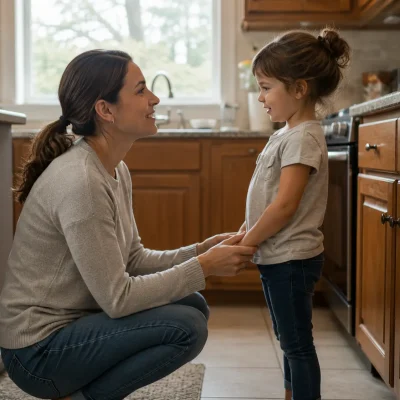
Child psychologists like Dr. Becky Kennedy popularized a simple rule: connect before you correct. A child who feels seen listens faster than a child who feels scolded. Before you jump straight to a consequence, get down to your child’s eye level and name what you notice. Say “You look really frustrated right now” instead of launching straight into “Stop that.” This one habit changes the tone of almost every conflict in a house with young kids.
One father in an online parenting forum described his three-year-old daughter refusing to leave the park every single afternoon. He tried threats first, and they backfired every time. Then he tried something different: he crouched down, held her hand, and said “I know you love the slide. It’s hard to stop something fun.” Within a week, her park meltdowns became rare — not because he gave in, but because she felt heard before she had to obey. This ranks among the most repeatable parenting tips for new parents who want less yelling and more cooperation at home.
Grandparents can use this method too. A grandmother watching her grandson during the week noticed that naming his feelings out loud — “You’re mad because Grandma said no more cookies” — calmed him faster than any bribe or lecture ever did. Teachers report the same pattern in classrooms: students settle faster when an adult labels the emotion before addressing the behavior.
These parenting tips for new parents don’t require a long conversation to work. A quick hand on the shoulder, a moment of eye contact before a request, or a simple “I’m on your side” changes how a child hears the next sentence. Parents who skip this step often find themselves repeating the same instruction five times; parents who start with connection usually only need to say it once.
Discipline That Teaches Instead of Punishes
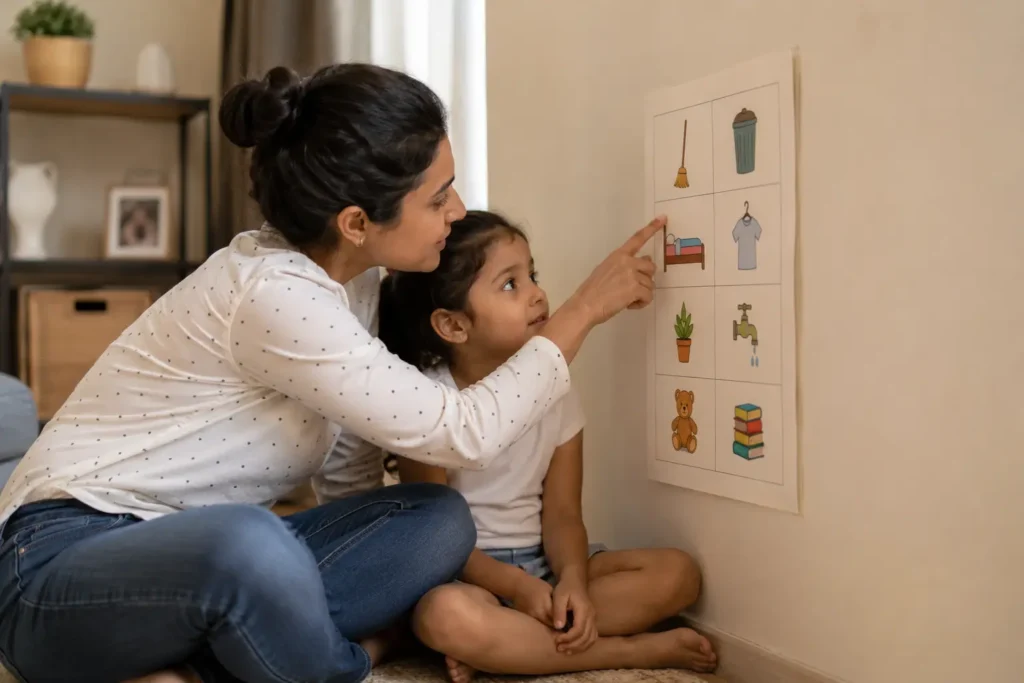
Among all the parenting tips for new parents worth learning, discipline that teaches a lesson beats discipline that simply delivers pain or fear. Parenting educator Jane Nelsen built an entire method, Positive Discipline, around this idea, and families across the country use her approach in homes and schools. The goal isn’t a child who obeys out of fear — it’s a child who understands why a rule exists.
Natural consequences work well here. If a toddler throws food on the floor, don’t lecture — simply say “Food that gets thrown is done for now,” and remove the plate. If a school-age child forgets a jacket despite reminders, let him feel cold on the walk to the car once, rather than rescuing him every time. The lesson lands faster than any speech does.
Dr. Thomas Phelan’s 1-2-3 Magic method offers another tried option many parents swear by: count to three calmly, and if the behavior continues, apply a short, predictable consequence like a brief time-out. No yelling, no negotiating, no lecture — just consistency. Consistency, more than harshness, teaches a child where the boundary sits. Among all the parenting tips for new parents that pediatricians recommend, “stay calm and stay consistent” comes up more than any other single piece of advice.
Avoid empty threats. A parent who says “If you do that again, we’re leaving” and then stays anyway teaches the child that words carry no weight. Say only what you plan to follow through on, then follow through every time.
Sibling fights call for the same steady parenting tips for new parents used everywhere else in the house. When two children grab the same toy, resist the urge to declare a winner. Separate the children, name both feelings — “You both want it, and only one of you can have it right now” — and set a timer so each child gets a fair turn. This teaches sharing as a skill instead of forcing it as a punishment, and it stops one child from feeling like the family favorite while the other feels blamed.
Consistency across caregivers matters as much as consistency within one household. A child who hears “no screens before homework” from a parent and “sure, go ahead” from a grandparent quickly learns to test whoever seems softer. Sit down together — parents, grandparents, and teachers — and agree on three or four core rules everyone will enforce the same way. The wording can flex from person to person, but the boundary itself shouldn’t move depending on who’s in the room.

Handle Meltdowns Without Losing Your Own Calm
Every new parent eventually faces a public meltdown — the grocery store floor tantrum, the screaming fit in the car seat, the refusal to put on shoes five minutes before school starts. The parenting tips for new parents that work in public meltdowns aren’t secret tricks — they’re scripts parents can practice until they become automatic.
Start by naming the feeling: “You’re really upset that we can’t buy that toy today.” Then offer a limited choice that still respects the boundary: “You can hold my hand or ride in the cart, but we’re leaving the toy on the shelf.” Choices give a young child a sense of control without changing the outcome. A mother who used this exact wording in a busy supermarket found that her four-year-old stopped mid-scream, chose the cart, and calmed within minutes — a result she never got from bribery or threats.
Breathing matters just as much as wording. Kids mirror the adult in the room. A parent who raises his voice teaches a child to raise hers right back. A parent who lowers her voice and slows her speech gives the child’s nervous system a model to copy. Many of the parenting tips for new parents that circulate among pediatric nurses boil down to this single instruction: get calm first, then get close, then talk.
Teachers use the same three steps in classrooms with strong results — a calm adult voice, physical closeness, and a clear, short choice. The setting changes; the method doesn’t.
Recovery matters too. Once the meltdown passes, skip the lecture about what went wrong. A tired, overstimulated child doesn’t absorb a speech in that moment. Instead, offer a hug, a sip of water, or a few quiet minutes together, and save any teaching conversation for later, when both of you feel calm enough to actually hear each other.
Build Small Daily Rituals That Say “I Love You”
Love, for a young child, doesn’t come through big gestures — it comes through small, repeated rituals that a child can count on. Parent-Child Interaction Therapy calls this “special time”: ten focused minutes of undivided attention each day that build a bond faster than an entire weekend of expensive outings. During special time, the child picks the activity and the parent simply follows — no correcting, no teaching, just playing.
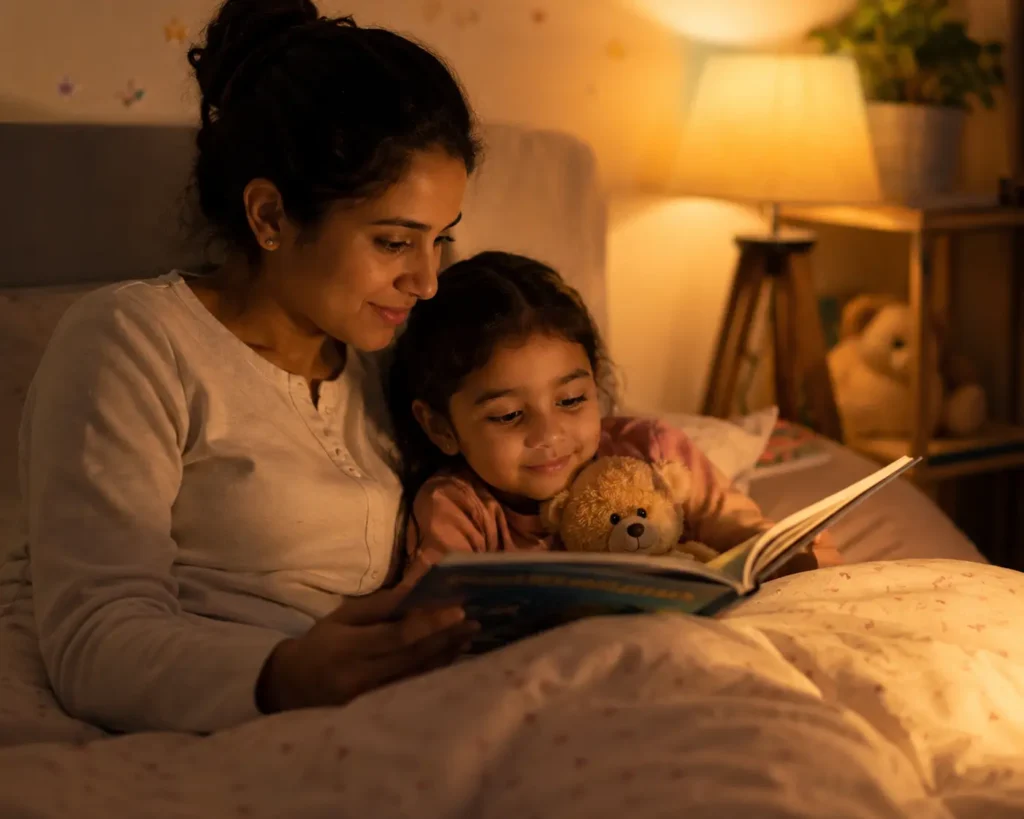
A bedtime ritual works the same way. The same three books, the same song, and the same hug at the same time each night tell a child the world is safe and predictable. One grandmother who read the same worn picture book to her grandson on every single visit for two years said he still asks for it by name — the repetition, not the plot, built the bond.
A high-five or a specific phrase at school drop-off gives a child something to hold onto during separation. A father who invented the phrase “See you at three, I love you three” for his daughter’s kindergarten drop-off said she started saying it back to him unprompted within days, and her morning crying nearly disappeared. Small, consistent rituals like these rank among the most quietly powerful parenting tips for new parents who worry they don’t have enough hours in the day to show love.
Mealtimes offer another easy opening. A family that puts phones away for one meal a day and asks each child a simple question — “What made you laugh today?” — builds a habit of connection that outlasts the toddler years and carries straight into the teenage ones, when open conversation gets much harder to start from scratch.
None of these parenting tips for new parents require money or elaborate planning. They require repetition, presence, and a parent willing to show up the same way, day after day.
Real love and real discipline grow from the same root: a child who trusts that an adult will show up calm, consistent, and close. Pick one of these parenting tips for new parents and try it this week — watch how quickly a toddler, a classroom, or a whole household begins to settle.
External Links
| Content | Link |
| Connect Before You Correct | https://www.zerotothree.org/resource/attachment-styles-in-early-childhood-what-parents-and-professionals-should-knhttps://www.cdc.gov/parenting-toddlers/about/index.html |
| Discipline That Teaches Instead of Punishes | https://publications.aap.org/pediatrics/article/142/6/e20183112/37452/Effective-Discipline-to-Raise-Healthy-Children https://www.healthychildren.org/English/family-life/family-dynamics/communication-discipline/Pages/Disciplining-Your-Child.aspx |
| Handle Meltdowns Without Losing Your Own Calm | https://www.cdc.gov/parenting-toddlers/responding-to-behavior/index.html |
| Build Small Daily Rituals That Say “I Love You” | https://www.zerotothree.org/resource/activities-for-bonding-and-learning-from-birth-to-12-months/ |
| General / Intro or Closing | https://www.cdc.gov/child-development/positive-parenting-tips/index.html |