A four-year-old who throws a plate across the kitchen isn’t defying you. She’s testing whether the rules hold when she’s furious.
That single moment holds the whole challenge behind every list of good parenting tips: how do you correct behavior without damaging the bond that makes correction possible? Most parents do not need more theory on child development. They need good parenting tips that work in the middle of a meltdown, at the dinner table, in the car, and at bedtime. Below are four good parenting tips that real families use, with real examples of how each one plays out.

Good Parenting Tips #1: Set Clear Rules Before the Storm Hits
Discipline falls apart when a parent invents the rule in the heat of the moment. A father named Ray learned this after months of yelling “no hitting!” mid-tantrum, only to watch his son hit again the next day. He switched tactics. Every Sunday night, he sat his son down for two minutes and named one house rule for the week, such as “we keep our hands to ourselves” or “we ask before we take a toy.” He said it calmly, before any conflict began, and he repeated it at breakfast.
Within three weeks, the hitting dropped. The rule was no longer new information delivered in anger. His son already knew it and could recall it even when upset. Good parenting tips almost always start here: state the expectation when everyone feels calm, not when everyone is already yelling.
This works because a stressed child struggles to take in a new instruction. Under stress, a young child reacts to what feels familiar instead of learning something new. A mother named Priya applies the same idea to screen time. She does not announce “no more iPad” the moment she wants to leave the park. She sets the limit at home the night before, so her son hears “we leave after fifteen more minutes” as a reminder, not a surprise attack. This is one of the most practical good parenting tips for any outing.
Try this routine for one week:
- Pick one rule. One rule beats five, because a small child cannot hold five rules at once.
- Say it in a calm moment. Use short words, eye contact, and a friendly voice.
- Repeat it before the risky moment. Say it at breakfast, in the car before you arrive, or at the store entrance.
- Praise the first success. Try “You kept your hands to yourself at lunch. That was hard, and you did it.”
Good Parenting Tips #2: Replace Punishment With Natural Consequences
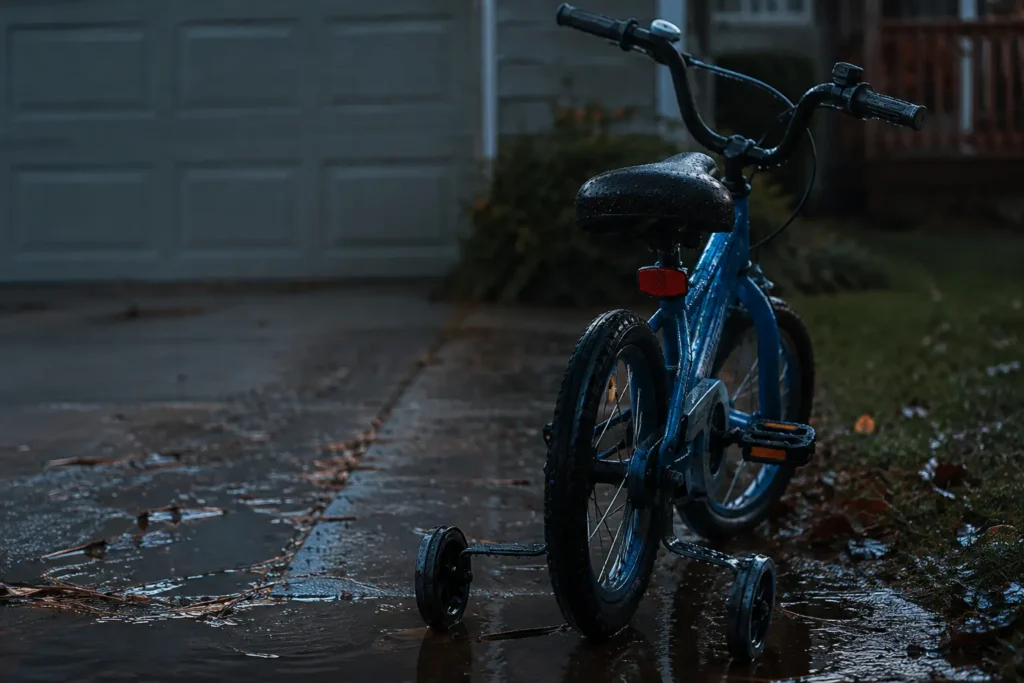
Punishment stops behavior for a moment. Consequences teach a lesson that lasts. A mother named Denise stopped taking away her son’s bike every time he left it in the driveway overnight. Instead, she let the natural result happen. One morning, it rained, and the bike seat was soaked. He rode it anyway, uncomfortable and annoyed, and he never left it out again. She did not lecture him. The wet seat did the teaching.
Compare this with a common approach: grounding a teenager for a week because he skipped homework once. The punishment matches the parent’s frustration, not the actual problem, and teenagers notice that mismatch right away. It breeds resentment instead of reflection.
Good parenting tips that change behavior link the consequence directly to the action. A child who refuses to eat dinner does not get dessert. Dessert is not a bargaining chip; it simply follows a meal. A child who loses a toy because he threw it across the room earns it back after a day, once he shows he can hold it without throwing it. The child feels cause and effect instead of parental anger, and that difference changes how children take rules to heart.
Before you choose any consequence, run this three-part check. Parenting educator Jane Nelsen calls these the “three R’s” of logical consequences:
- Related: Does the consequence connect to what the child did?
- Respectful: Can you say it in a calm voice, without shame?
- Reasonable: Does it fit the child’s age and the size of the mistake?
Good Parenting Tips #3: Repair the Relationship After Every Conflict
Every disciplinary moment creates a small rupture. What shapes a child’s sense of security is not whether the rupture happened, but whether an adult repaired it. Developmental psychologist Ed Tronick has described how healthy parent-child bonds move through mismatch and repair many times a day. Perfect harmony is not the goal. Repair is.
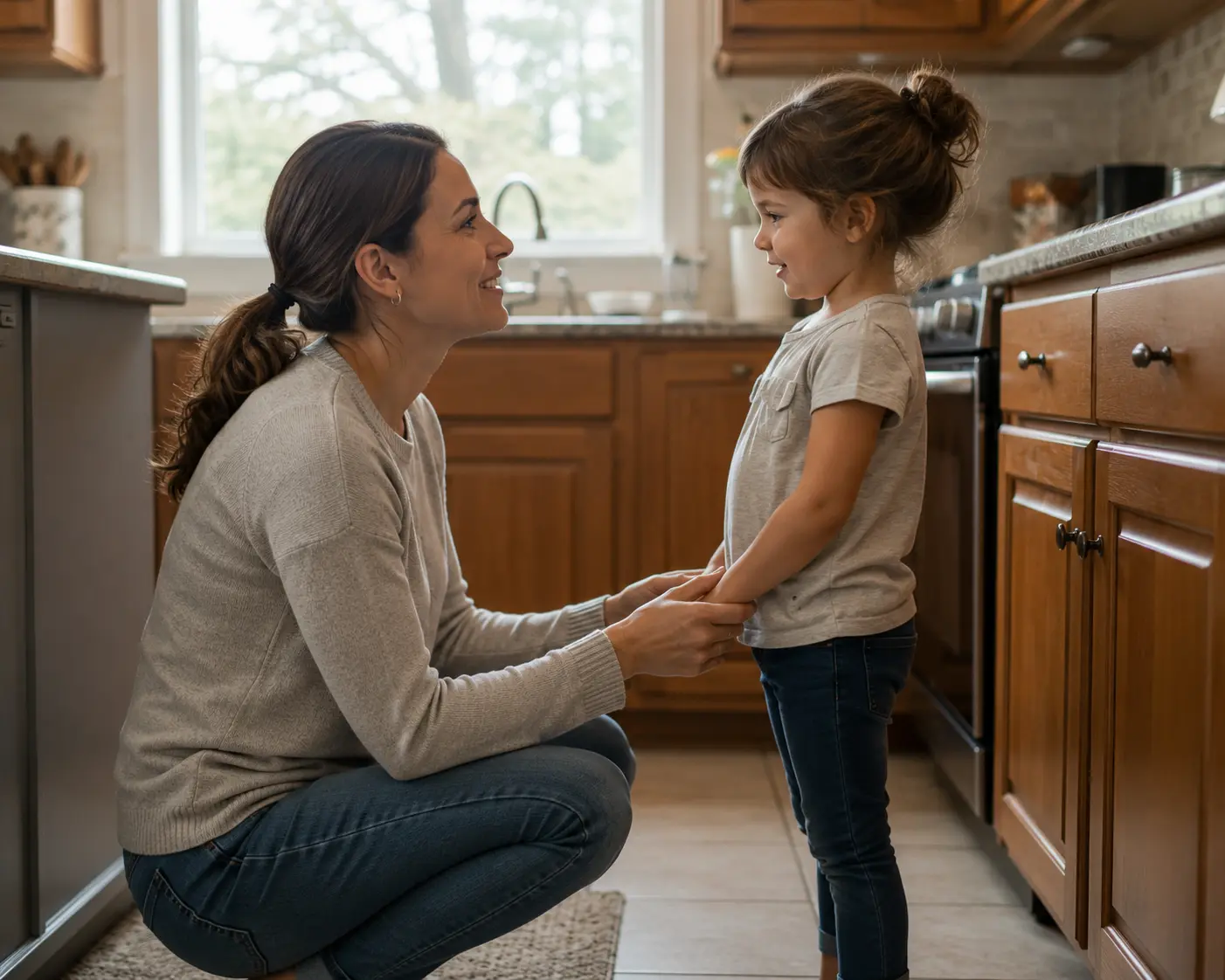
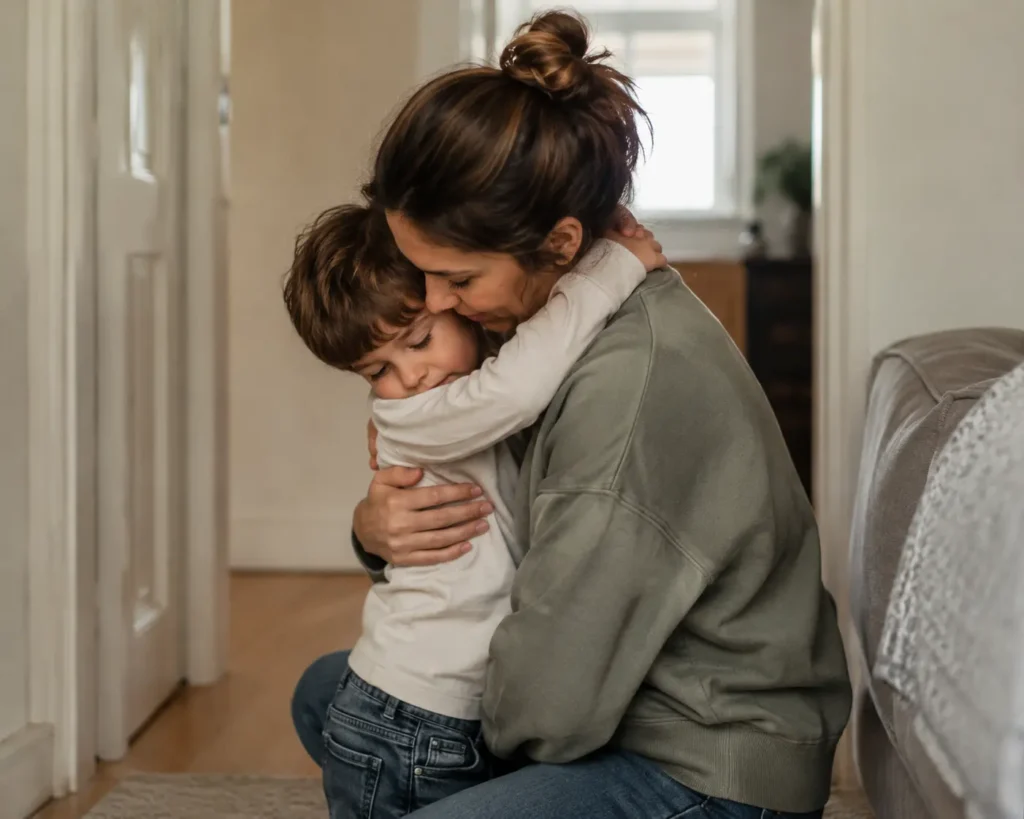
A mother named Angela follows one rule after every timeout. Once her daughter calms down, Angela crouches to her eye level and says, “I still love you. That behavior wasn’t okay, but you’re not in trouble anymore.” She does not skip this step, even when she feels exhausted.
Kids who miss this repair often read the discipline as proof that the relationship itself feels unstable. A father named Tom noticed his son flinching and going quiet for hours after every correction. Tom started ending each disciplinary talk with a hug and a specific compliment: “You calmed yourself down faster than yesterday, and I noticed.” Within a month, his son stopped shutting down and started coming to Tom to talk through what happened.
Repair does not erase the consequence. The bike still needs cleaning, and the timeout still happened. Repair means the child walks away knowing the relationship survived the correction intact. This single habit separates discipline that builds connection from discipline that erodes it, and it belongs at the center of any list of good parenting tips a parent actually keeps.
Use this simple four-part repair:
- Wait until you both feel calm. A repair attempt in the middle of tears usually fails.
- Get low. Crouch or sit at your child’s eye level.
- Name the boundary and the love together. Try “The rule stays, and so do I.”
- End with something specific you noticed. Praise a real effort, however small.
Repair also works when you are the one who lost control. Every parent yells sometimes. Go back to your child and say what happened: “I yelled, and that was not okay. I’m sorry. Next time, I will take a breath first.” Among all good parenting tips, this one may feel the hardest, and it may teach the most. These good parenting tips about repair take less than a minute, and children remember them for years.

Good Parenting Tips #4: Model the Behavior You Want to See
Children copy regulation, not instruction. Psychologist Albert Bandura’s classic research on social learning showed that children copy the behavior they watch adults perform. A mother named Sofia used to demand that her son “calm down” while she herself yelled across the room. Nothing changed until she began narrating her own frustration out loud: “I’m feeling really annoyed right now, so I’m going to take three breaths before I say anything.” A few weeks later, her son began using the exact phrase during his own tantrums, word for word.
Kids absorb emotional regulation much like they absorb language: through repeated exposure rather than direct teaching. A father who slams a cabinet door when he feels angry and then tells his daughter to “use her words” sends two contradictory messages. Children tend to trust the behavior over the instruction every time.
Good parenting tips rarely hand the child a script. They ask the parent to show the reaction they want repeated. A dad named Marcus began apologizing out loud whenever he snapped at his kids: “I raised my voice and that wasn’t fair. I’m sorry.” Within a season, his children started apologizing to each other after arguments without being told, something he had never taught them directly.
You can model in four easy ways:
- Narrate your calm-down. Say what you feel and what you will do about it.
- Apologize fast and be specific. “I snapped at you” works better than “sorry if you felt upset.”
- Show kindness where your child can see it. Your tone with a waiter, a neighbor, or the other parent teaches as much as any rule.
- Let your child watch you try again. Say “That recipe burned. I’ll try again,” and your child learns that mistakes can be fixed.
Teachers and grandparents hold the same power, because children watch every adult around them. A teacher who stays calm during a noisy transition shows a whole class how to settle. A grandparent who says “I was wrong, let me fix that” shows a child that adults can grow too. These good parenting tips cost nothing, and they work in every home and classroom.
Rules set in advance, consequences that make sense, repair after every conflict, and behavior worth copying do more than stop bad moments; they build the trust a child carries for life. Pick one of these good parenting tips this week, because your child is always watching and always ready to meet you halfway.
External Link
| Content | Links |
| Positive discipline strategies | https://www.healthychildren.org/English/family-life/family-dynamics/communication-discipline/Pages/Disciplining-Your-Child.aspx |
| Replace Punishment With Powerful Natural Consequences | https://publications.aap.org/aapnews/news/7019/AAP-recommends-positive-discipline-rather-than |
| Replace Punishment With Powerful Natural Consequences | https://www.chop.edu/news/health-tip/dos-and-donts-disciplining-your-child |
| Set Essential Rules Before the Storm Hits | https://depts.washington.edu/allcwe2/fosterparents/training/natlog/nat05.htm |