Parenting 101 begins with one idea: a child cooperates more when the child feels close to you. Many new parents expect parenting 101 to look like a rulebook. In real homes, parenting 101 works more like a strong friendship with a few firm rules attached.
Psychologist Diana Baumrind studied parenting styles in the 1960s. She described authoritative parenting, which pairs high warmth with clear limits. Many later studies link this style to better school results and fewer behavior problems than harsh or permissive styles. Treat this style as the base of parenting 101.
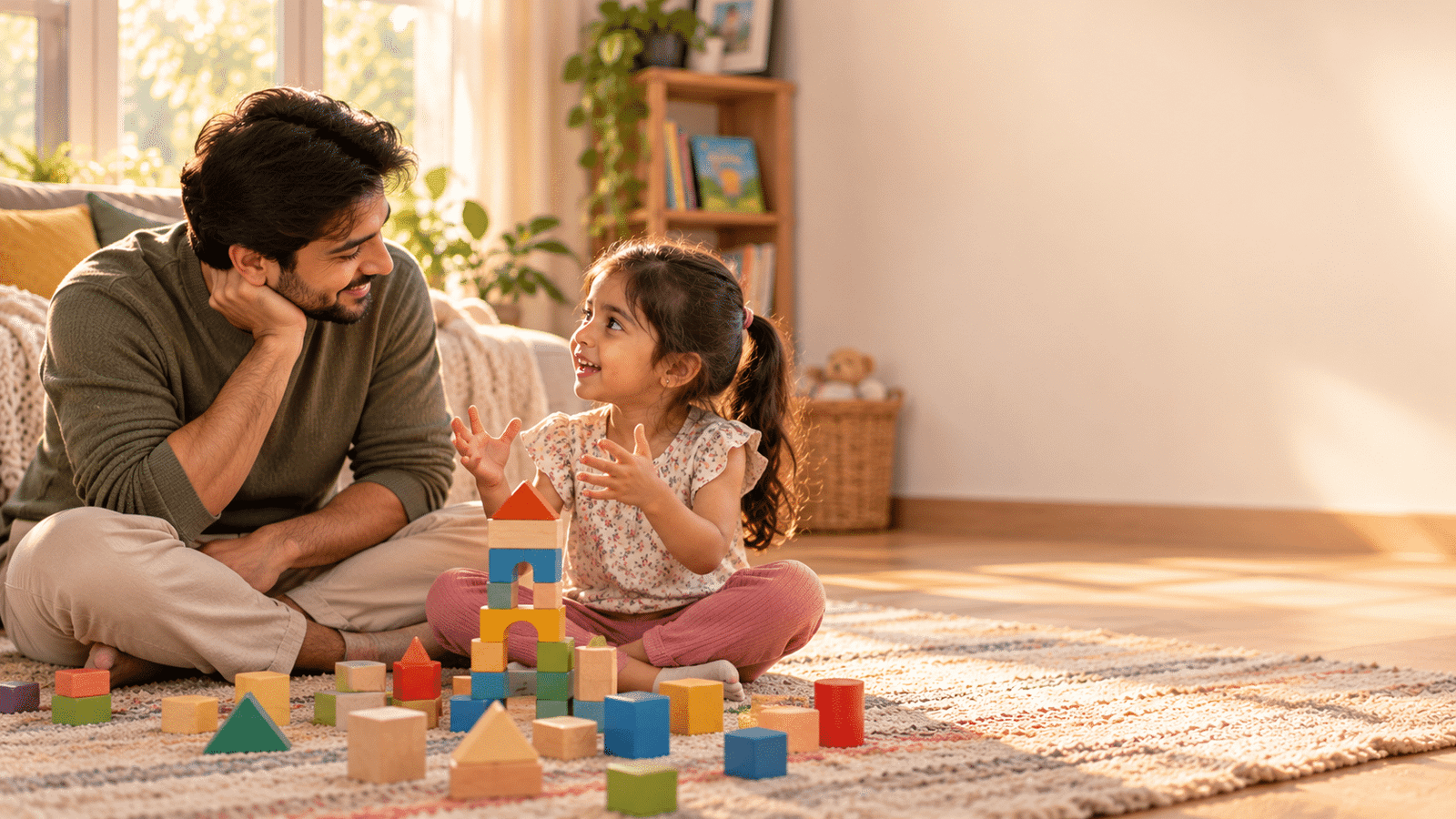
Connection looks small. The Harvard Center on the Developing Child uses the term “serve and return” for the back-and-forth moments between an adult and a young child. A baby babbles, the adult looks and answers, and the baby babbles again. The center explains that these exchanges help build the brain’s early architecture. You do not need special toys. You need your face, your voice, and your attention.
Here is a composite scenario that reflects patterns parents often describe. A new father, Sam, holds his four-month-old daughter at 3 a.m. She cries, and he feels lost. He stops searching his phone for answers. He looks at her and says, “You’re having a hard night, and I’m here.” Then he rocks her. She settles after a few minutes. Sam used no trick. He answered her signal. That is parenting 101 at its simplest.
Parenting 101 shifts with age. With a baby, it means answering cries. With a toddler, it means offering two choices. With a school-age child, it means listening before you fix. With a teenager, it means staying available even when the teenager seems to want space.
Try these three parenting 101 habits at any age:

- Greet your child first. When your child walks in, put down your phone and say hello before you ask about shoes or homework.
- Get low. Kneel or sit so your eyes meet your child’s eyes. A child who looks up at a tall adult often hears a command. A child at eye level hears a conversation.
- Ask one real question a day. Skip “How was school?” Ask “What made you laugh today?”
Teachers can use the same parenting 101 habits. A second-grade teacher can greet each child at the door by name. That ten-second routine tells every child, “I see you.” Grandparents can use it on video calls by asking about the child’s day and then listening without interruption.
Connection does not mean you give in. You can hug a child and still say no. Parenting 101 asks you to do both at once.
Parenting 101 Discipline: Clear Limits Without Shouting

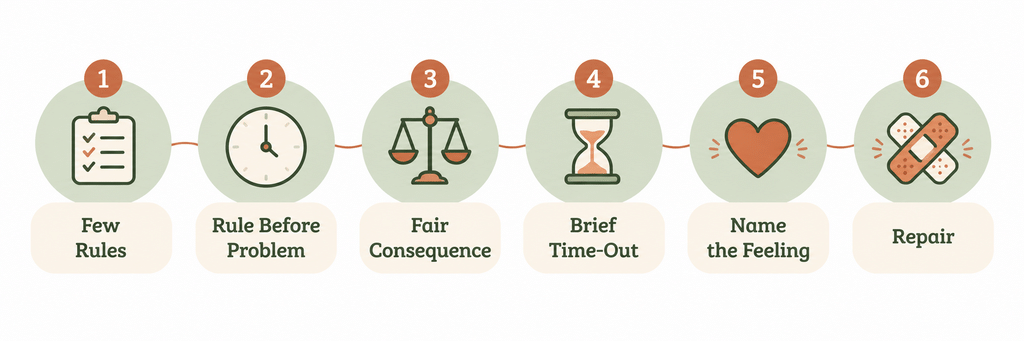
The word discipline comes from a Latin root that means “to teach.” Good discipline teaches a child what to do next. It does not aim to make a child suffer. This part of parenting 101 uses six steps that parents, teachers, and grandparents can all follow.
1. Set few rules and keep them the same. Pick three to five rules for your home or classroom. Use plain words: “We use gentle hands. We tell the truth. We clean up.” Children test a rule that changes every day. They follow a rule that stays steady. Steady rules sit at the heart of parenting 101.
2. Give the rule before the problem. Tell a child what to expect before the trouble starts. In the car outside a store, say, “You can hold the list. We will not buy toys today.” Children often handle limits better when they know the limits ahead of time. This step of parenting 101 saves many public meltdowns.
3. Match the consequence to the act. If a child throws a block, the block goes away for a few minutes. If a child spills juice on purpose, the child helps wipe it up. Keep the consequence short, calm, and linked to what happened. Skip the long lecture, and skip any threat you will not carry out. Fair consequences are a core piece of parenting 101.
4. Use brief time-outs, and skip spanking. The American Academy of Pediatrics published a policy statement on discipline in 2018. It advises against spanking and harsh verbal discipline, and it describes praise, clear rules, and brief time-outs as better tools. Many pediatric sources suggest about one minute of time-out per year of age. Stay near your child, keep your voice flat, and end the time-out with a fresh start. Sound parenting 101 leaves out physical punishment.
5. Name the feeling and hold the limit. Psychologist John Gottman calls this emotion coaching. You accept the feeling and limit the behavior. For example: “You’re angry that screen time ended. You can stomp your feet or squeeze a pillow. You cannot throw the tablet.” The child learns that feelings are safe and actions have edges. Emotion coaching fits neatly into parenting 101.
6. Repair after you lose your cool. Every parent yells sometimes. When you do, go back and say, “I yelled earlier. That was not okay. I’m sorry.” Repair shows a child that adults own their mistakes, and it keeps trust strong. A parent who repairs well practices the best of parenting 101.
Here is a second composite scenario. A fourth-grade teacher has a student who calls out answers all day. Scolding him in front of the class does not work. She meets him privately and agrees on a hand signal. When he raises his hand instead of calling out, she nods and calls on him soon after. She also tells him, “You waited your turn. That was hard, and you did it.” Over several weeks, his calling out drops. She changed his behavior with a plan, not a punishment. That is parenting 101 in a classroom.
Grandparents face a different test. The child’s parents set the main rules, so follow them. If the parents say no sugar before dinner, you say it too. When a rule feels unclear, ask the parents instead of guessing. You can still keep your own house rules, such as shoes by the door and phones off at the table. Children can handle different rules in different places, as long as each adult stays steady in their own space. Grandparents who respect this part of parenting 101 keep the peace and keep the child’s trust.
Parenting 101 for Everyday Love: Small Habits That Build Trust
Discipline sets limits, and love gives a child a reason to trust them. Parenting 101 does not ask for grand gestures. It asks for small habits that you repeat.
Praise effort, not just results. In 1998, psychologists Claudia Mueller and Carol Dweck ran a well-known study with fifth graders. Children who heard praise for intelligence chose easier tasks afterward and did worse after a failure. Children who heard praise for effort chose harder tasks and kept trying. Say, “You worked hard on that drawing,” or “You were kind to your friend today.” Praise the things your child controls. This habit belongs in every version of parenting 101.
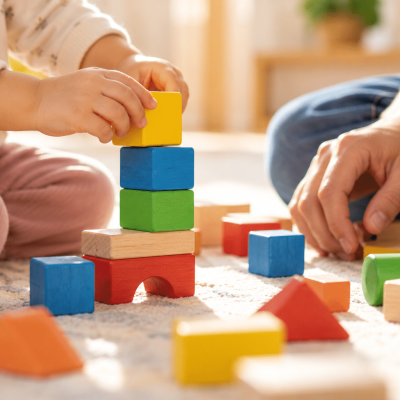
Give ten minutes of full attention. Pick a time each day. Put your phone in another room. Let your child choose the activity: blocks, drawing, a walk, or a card game. Do not teach, fix, or correct. Your child gets a clear message: “You matter even when you do nothing special.” Start with ten minutes and add more later. This is the easiest parenting 101 habit to start.
Build a bedtime routine. Predictable routines help children feel safe. Keep it short: bath, pajamas, two books, lights out, one sentence of love. Use the same order each night. Add a “high and low” chat, where each person shares the best part and the hardest part of the day. Parents who follow this simple part of parenting 101 give the child a calm way to end the day.
Offer small choices. Ask, “Do you want the red cup or the blue cup?” Small choices give children a sense of control and can ease power struggles. A child who practices small choices learns to make bigger ones later. Choices are a quiet tool of parenting 101.
Say “I love you” and show it. Words matter, and actions matter more. Show up to the recital. Keep your promises. Admit when you do not know something. Children trust adults whose actions match their words. Parenting 101 values action over speeches.
Meet big feelings with presence. When a child melts down, you do not need a perfect speech. Sit nearby, breathe slowly, and say, “I’m here. Take your time.” When the storm passes, talk about what happened. The Harvard Center on the Developing Child reports that children who develop resilience usually have at least one stable, committed relationship with a supportive adult. You can be that adult. Being that adult is the deepest lesson of parenting 101.
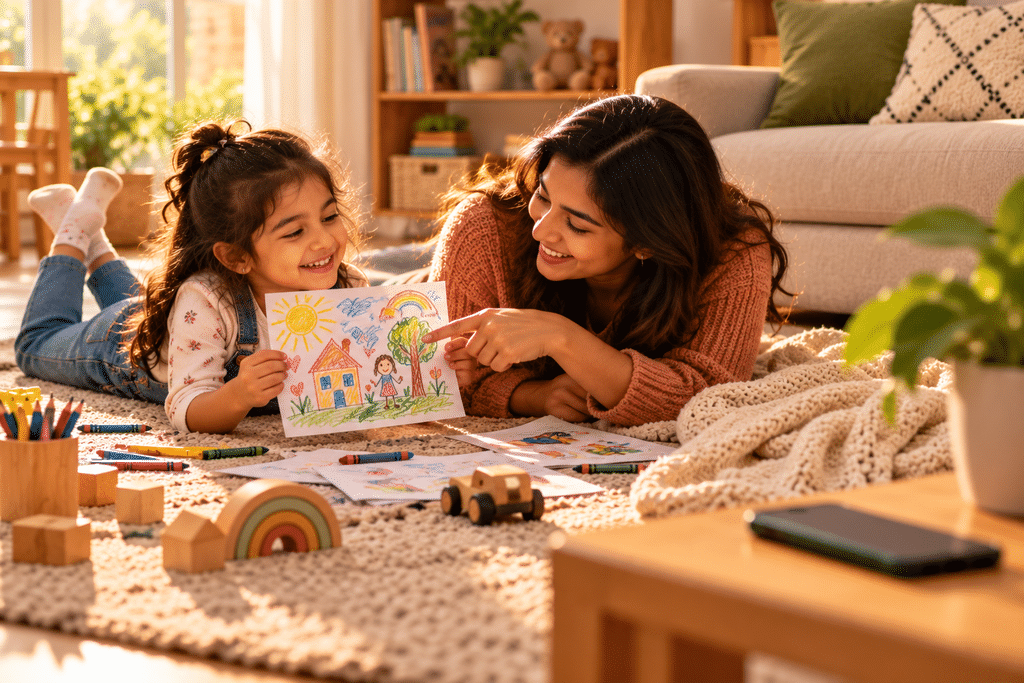
Consider a third composite scenario. An aunt named Priya looks after her nephew, Kabir, age six, on Saturdays. Kabir often says, “I’m bad at drawing.” Priya stops fixing his pictures. She says, “I like how you used so many colors. Tell me about this part.” She also sets a ten-minute timer for “Kabir time” with no phones. After a few months, Kabir starts showing her his drawings without apologizing first. Priya used no special technique. She used parenting 101: effort praise, full attention, and patience.
Parenting 101 Roles for New Parents, Teachers, and Grandparents
Each adult plays a different part in a child’s life. Parenting 101 gives all three roles the same core: calm, consistent, and kind.
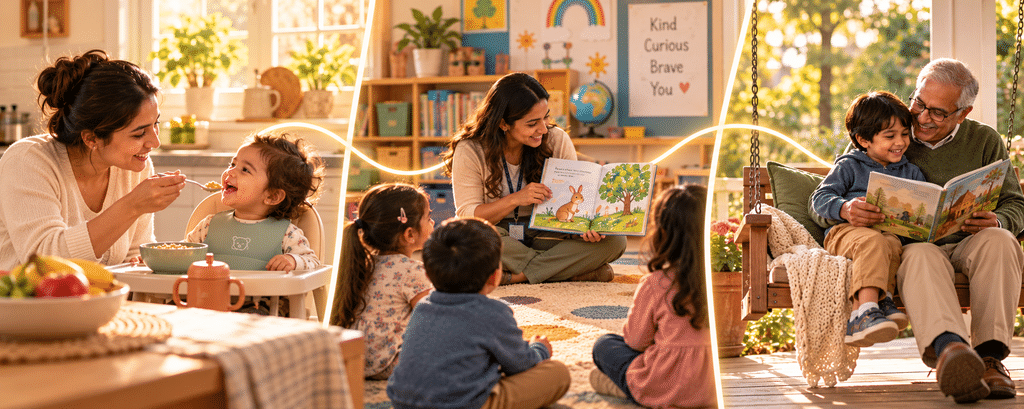
For new parents
- Pick three family values. Write down three words, such as honesty, kindness, and safety. When you feel stuck, return to the list. Parenting 101 gets easier when you know what you want your child to feel at home.
- Protect your sleep and your health. Tired adults lose patience faster. Ask a partner, a friend, or a relative to take a shift.
- Talk to your pediatrician. Ask about development, feeding, sleep, and behavior at every checkup. Pediatricians can spot problems early.
- Do not compare. Another family’s best photo does not show their hardest night. Parenting 101 asks you to compare your child with yesterday’s child, not the neighbor’s.
For teachers
- Post the schedule and give warnings. Give a two-minute warning before transitions. Children who know what comes next often cooperate more easily. Predictable days are parenting 101 for the classroom.
- Correct privately, praise publicly. A quiet word at the child’s desk protects dignity. A specific compliment in front of the class builds confidence. Respect is parenting 101 in action.
- Share what you see in neutral words. Say, “Maya cried when she saw her quiz. I’d like to work with you on a plan,” not “Maya has anxiety.” Describe behavior and leave diagnosis to professionals. This habit turns parenting 101 into a shared effort between home and school.
- Bring in the school counselor. Do this when a child’s behavior or mood worries you for more than a few weeks.
For grandparents
- Back the parents’ main rules. Shared rules are parenting 101 across two homes.
- Offer time and stories. Tell the child about the day their parent was small. Cook together. Read the same book again.
- Do not use gifts to replace attention. A weekly phone call tells a child you are thinking of them.
- Ask before you advise. Say, “Would you like my thoughts on this?” Respect is part of parenting 101 too.
For everyone
- Act fast on safety. If a child faces physical harm, threats, or talks about self-harm, contact local child protection services, emergency services, or a crisis line right away. In the US, the Childhelp National Child Abuse Hotline offers help at 1-800-422-4453.
- Get help early for ongoing problems. If tantrums, sleep trouble, or worry last for weeks, or if a child loses skills, talk with a pediatrician or child psychologist. Needing help does not mean you failed at parenting 101.
- Expect slow progress. Parenting 101 works like exercise: results come from repetition. A new routine may take weeks to settle, so keep going.
- Forgive yourself. You will miss a bedtime, snap at breakfast, or forget a permission slip. Parenting 101 does not demand perfection. It demands that you come back and try again.
Parenting 101 never changes: stay calm, stay consistent, and love your child out loud. Do those three things on ordinary days, and your child will carry them into every day that follows.