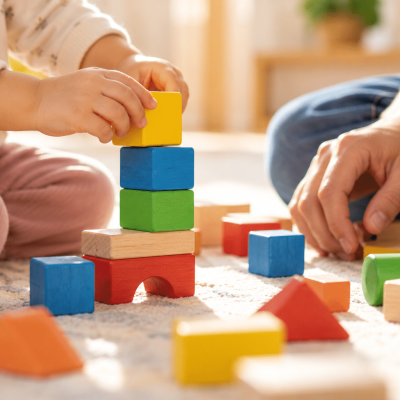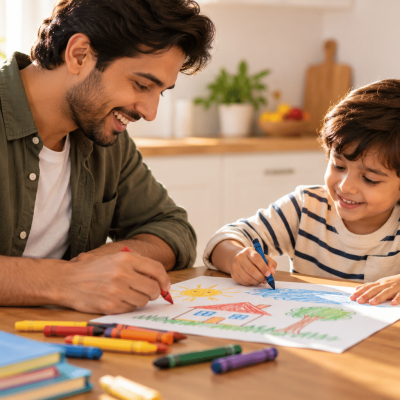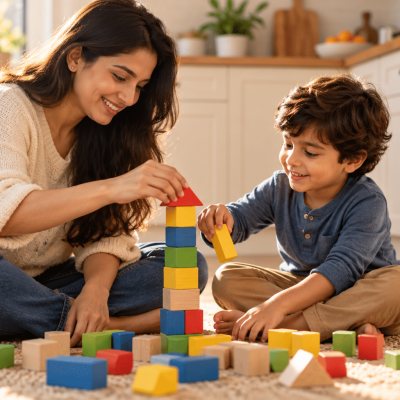
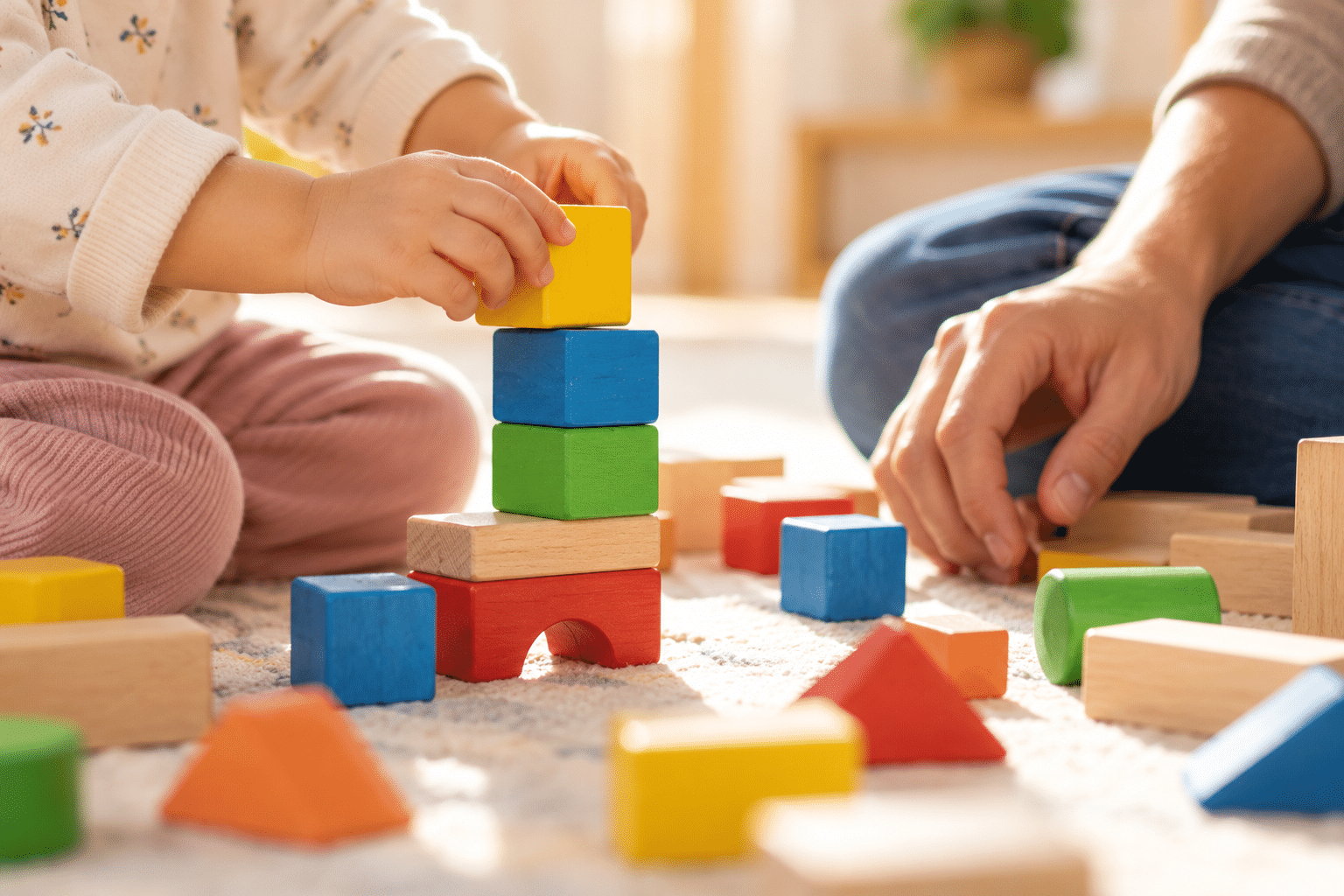
Every scribble, stack, and spilled spoonful of cereal shows your child’s hands at work, and fine motor development milestones tell you what to expect along the way.
Fine Motor Development Milestones From Birth to Age Five
Fine motor skills use the small muscles in the hands, fingers, and wrists. Children use them to grab a spoon, turn a page, zip a coat, and hold a pencil. Fine motor development milestones are the hand skills most children show at certain ages. Treat fine motor development milestones as a guide, not a test. Every child moves at a different pace, and a child who reaches one skill a few weeks after a cousin or classmate is often right on track.
The Centers for Disease Control and Prevention (CDC) publishes free milestone checklists for ages 2 months to 5 years, plus a Milestone Tracker app. The list below sums up the fine motor development milestones in those checklists in plain words. Open the CDC pages for the full, current version.
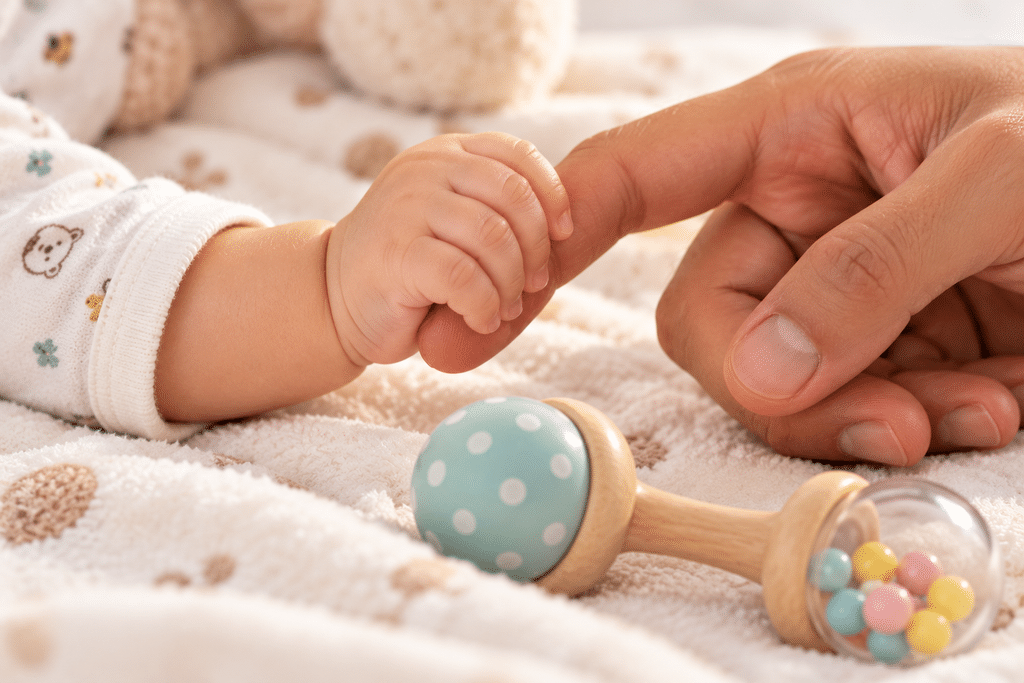
- 2 to 4 months: Your baby opens her hands briefly, holds a toy you place in her hand, swings an arm at a toy, and brings her hands to her mouth.
- 6 months: She reaches for a toy you hold and puts objects in her mouth.
- 9 months: She moves a toy from one hand to the other and rakes food toward herself with her fingers.
- 12 months: She picks up small bits of soft food between her thumb and pointer finger and puts a block in a cup.
- 18 months: She scribbles, feeds herself with her fingers, and tries to use a spoon.
- 2 years: She holds one object while her other hand works, such as holding a container and taking off the lid.
- 30 months: She twists lids and doorknobs, and she turns book pages one at a time.
- 3 years: She strings large beads, puts on loose clothes, and uses a fork.
- 4 years: She pours and stirs with some help, unbuttons some buttons, and holds a crayon between her fingers and thumb instead of in a fist.
- 5 years: She uses a fork and spoon, and sometimes a table knife. She draws a person with at least six body parts, prints some letters or numbers, and copies a triangle.
Why do these skills matter? Hands do the daily work of growing up: eating, dressing, drawing, building, and later writing. A child who feels capable with her hands often feels more confident everywhere else. That is why fine motor development milestones deserve attention long before school starts.
Two notes help parents read the list calmly. First, babies born early often follow an “adjusted age,” so ask your pediatrician which age to use. Second, the list shows typical skills, not deadlines. Use fine motor development milestones to spot what to practice next, not to compare your child with other children.
Here is a simple way to use the list. Once a month, read the row for your child’s age and the row before it. Check which skills your child already shows, and pick one skill from the next row to practice through play. Reading fine motor development milestones this way takes two minutes and turns a long chart into one small, friendly goal.
Simple Play That Builds Fine Motor Development Milestones at Home
Children reach fine motor development milestones through play, not drills. You do not need special toys. You need a few safe objects, ten relaxed minutes, and a willingness to let your child do the work.
Start with a “hand-skills drawer” in your kitchen. Fill it with items that support fine motor development milestones at almost no cost: large pasta tubes, yarn, kid-safe tongs, pom-poms, play dough, chunky crayons, and a few plastic containers with lids. Open the drawer when your child feels curious, and close it when the fun fades.
For babies (0 to 12 months): Place a rattle or a soft toy within reach, and let your baby grab it. Offer a few different textures: a cloth, a wooden spoon, a board book. At mealtimes, give soft finger foods cut small, so your baby can practice picking them up. These simple games build the earliest fine motor development milestones. Stay close. Babies put everything in their mouths, so keep small objects away and watch every meal.
For toddlers (1 to 3 years): Stack cups, drop blocks into a bucket, and tear paper. Hand your child chunky crayons and a big sheet of paper. Roll play dough into snakes, and let your child poke, pinch, and squash it. Open and close containers with lids. Each of these games builds the hand skills in the toddler stage of fine motor development milestones. Choose large items, and supervise closely, because small pieces can choke children under age 3.
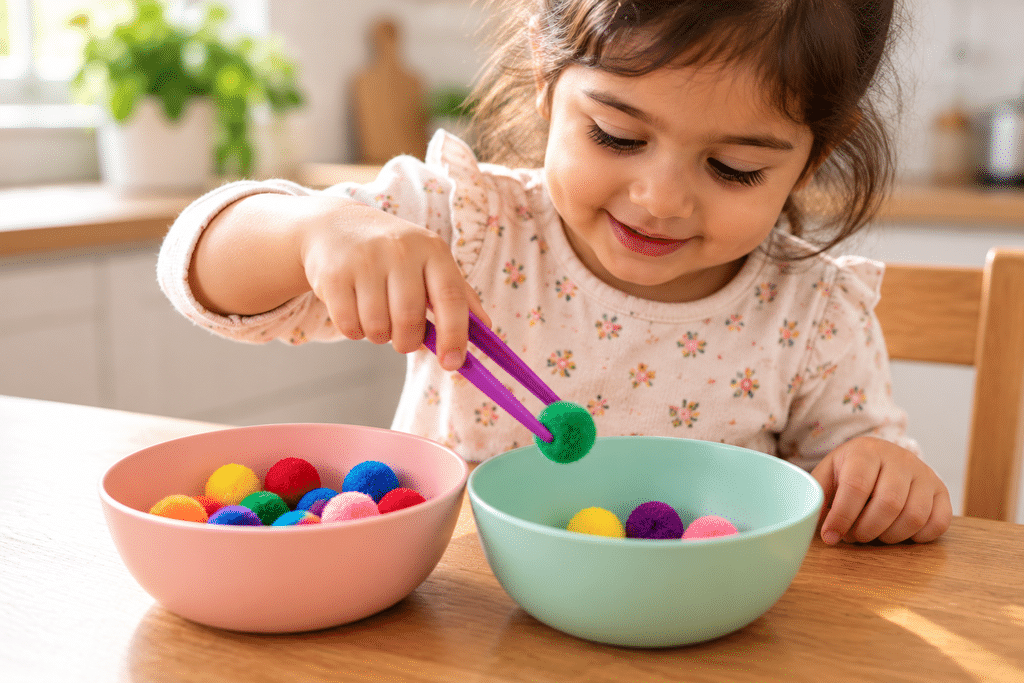
For preschoolers (3 to 5 years): Hand your child tongs or a spoon to move pom-poms from one bowl to another. Lace a card with a shoelace. String large pasta tubes onto yarn. Practice snaps, zippers, and big buttons on dress-up clothes. Cut play dough or paper with child-safe scissors. Draw shapes together, starting with lines and circles. These games prepare hands for the later fine motor development milestones that school needs, such as writing and cutting.
Here is a composite example. Priya’s three-year-old son, Arjun, dropped his crayon whenever she asked him to draw. Priya wanted him to reach the fine motor development milestones for age three, but she did not push. For two weeks, she rolled play dough with him for ten minutes after breakfast. They made snakes, pancakes, and tiny balls. Then she put a fat crayon next to the dough, and Arjun picked it up on his own. Priya never forced the grip. She built the hand strength first, and the crayon followed.
Four habits make any fine motor development milestones activity work better:
- Follow your child’s lead. A child who chooses the activity stays with it longer.
- Let your child finish. Do not take the spoon or the zipper away the moment the task gets hard. Wait, and offer a hint before you offer a rescue.
- Keep sessions short. Ten minutes of happy practice beats thirty minutes of tears.
- Do not force a hand choice. Offer tools in the middle and let your child pick a side.
Many parents ask which skill to practice first. Pick the next item on the list above, and work on it through play. If your 12-month-old picks up food with her whole fist, offer tiny soft pieces and let her practice. If your four-year-old grips a crayon in a fist, try drawing with a short broken crayon, because the small size encourages a finger-and-thumb hold. Progress through fine motor development milestones comes from steady, small practice.
Fine Motor Development Milestones Need Patience, Not Pressure
Hand skills develop slowly, and the learning stage comes with mess, frustration, and noise. How you respond teaches your child as much as the activity does. Discipline and love work together here, just as they do everywhere else in parenting. A calm adult makes fine motor development milestones feel safe to chase.
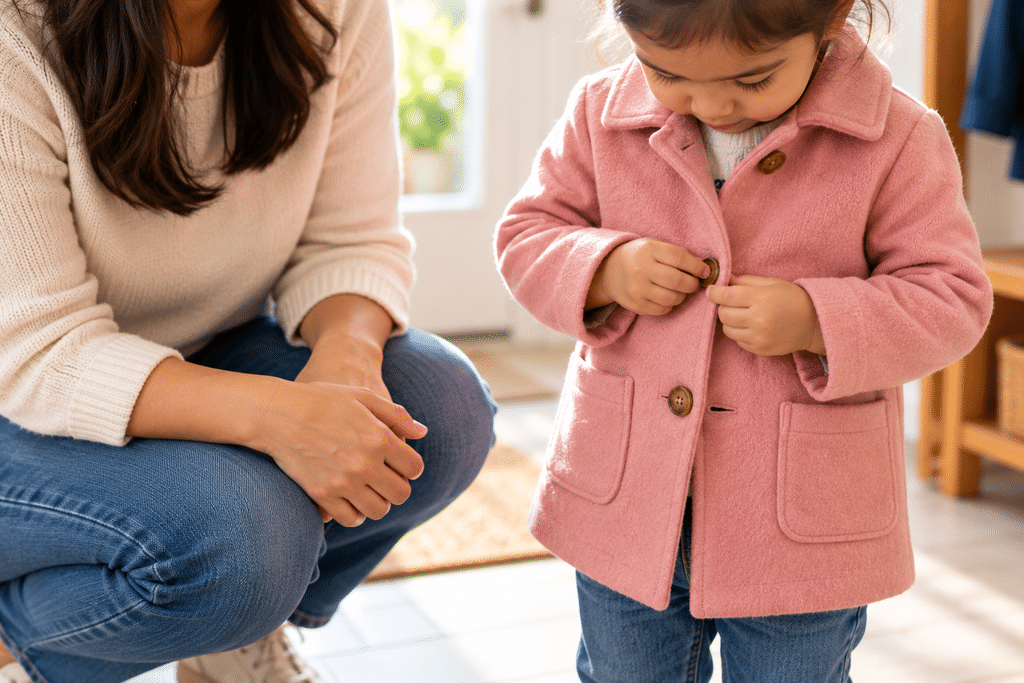
Start with frustration. A four-year-old who cannot button her coat may scream, throw the coat, or give up. Skip the lecture. Name the feeling and offer a choice: “You feel frustrated. You can try one more button, or I can help with the bottom one.” The child keeps her dignity, and you keep the limit. Notice that you did not cancel the task; you made it smaller. This approach respects fine motor development milestones, because a child can only do what her hands are ready to do.
Next, handle the mess. A toddler who feeds herself will drop food, and a child who paints will spill water. Messy meals are part of fine motor development milestones, so expect them. Set one clear rule ahead of time: “Food stays on the table. If food hits the floor on purpose, the meal ends.” Say it in a calm moment, and then follow through without anger. A child who drops peas by accident gets a new spoon and a smile. A child who throws peas on purpose learns that the meal ends. The rule treats clumsy hands and deliberate behavior differently, and children understand the difference.
Then handle the crayon on the wall. Almost every child draws on a wall once. Do not shout or take away all the crayons forever. Hand your child a sponge, and say, “Crayons go on paper. Walls get wiped. Let’s clean it together.” Then give her a big piece of paper and let her keep drawing. The consequence matches the action, and the child gets a better place to practice. Parenting educator Jane Nelsen calls this kind of response related, respectful, and reasonable.
Praise the effort during fine motor development milestones, not just the result. “You worked so hard on that zipper” does more than “Good job.” Specific praise tells your child which behavior to repeat. Yale psychologist Alan Kazdin teaches that praising a specific behavior makes that behavior happen more often. Praise the try, even when the zipper still sticks.
Here is a second composite example. Hana’s five-year-old, Elijah, hated writing his name and tore up every attempt. Name writing is one of the classic fine motor development milestones at age five, and Elijah felt the pressure. Hana used to say, “Just try again,” which made him angrier. She changed her words: “Writing is hard on your hands. Let’s trace the first letter together, and you write the rest.” She praised each letter he finished. After a few weeks, he started asking to write on his own. Hana did not drop her expectation. She made the first step easier, and she noticed his effort out loud.
Watch for three common mistakes that slow fine motor development milestones:
- Rushing the child. If mornings feel tight, start getting dressed ten minutes earlier instead of snapping at slow fingers.
- Doing everything for the child. It saves time today and costs skills tomorrow.
- Comparing siblings or classmates. Comparison teaches shame, and shame makes a child avoid the very task she needs to practice.
Above all, tell your child you love her whether or not the shoelaces stay tied. Say it plainly: “I love watching you learn.” A child who feels safe will keep trying, and trying is how every item in the fine motor development milestones list becomes real.
Teachers and Grandparents Can Support Fine Motor Development Milestones
Children spend hours each week with adults beyond their parents. Teachers and grandparents hold real power to build hand skills, and they can do it without special training. When every adult supports fine motor development milestones in the same calm way, the child hears one steady message in every place.
Teachers, set up short activity stations during the day: a play dough table, a lacing bin, a tong-and-bead station, and a drawing corner. Rotate children through each station for five to ten minutes. These stations support fine motor development milestones for the whole class, and children never feel singled out. Offer thick and thin crayons, and let children choose. Do not push heavy handwriting before a child’s hands feel ready. A child who tears paper, pinches clay, and threads beads builds the hand strength that makes later writing easier.
Tell parents what you see, and use plain words: “Mia now holds her crayon with her fingers and thumb.” Share the news in a note or at pickup, and mention one thing to try at home. When teachers and parents describe fine motor development milestones in the same simple language, children make faster progress and feel less pressure.
Give children a job that uses their hands, too. A line leader can hand out papers. A helper can water plants with a small can. These tasks build skill and confidence, and they teach responsibility.
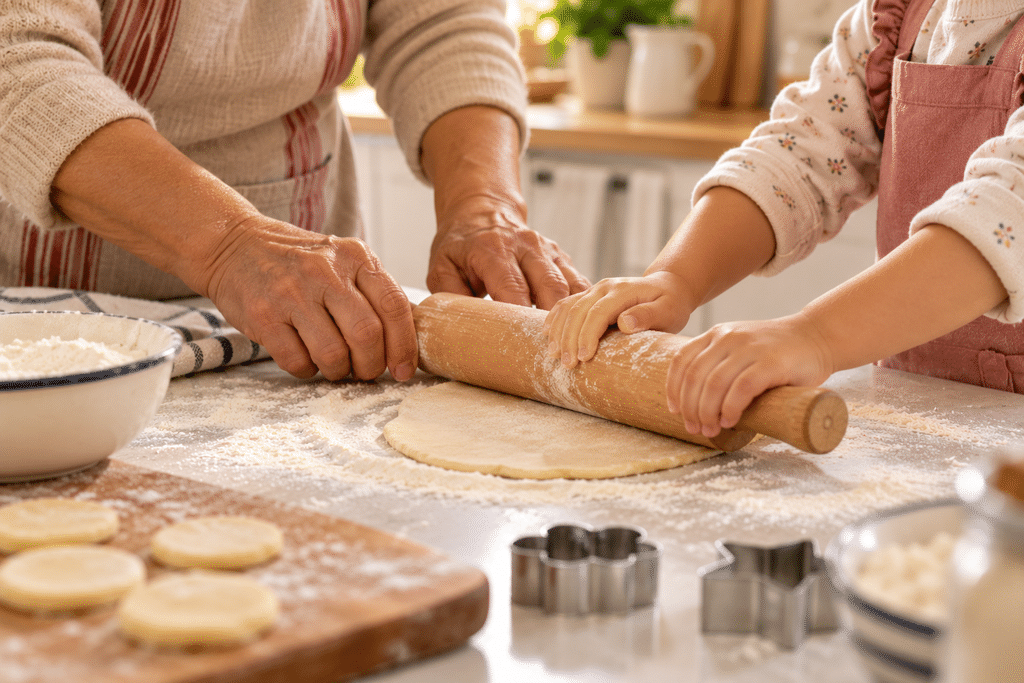
Grandparents, you hold a gift that parents often lack: time. Cook together, and let the child stir, pour, and mash. Sort buttons by color. Plant seeds, and let the child push them into the soil. Thread large beads, play card games that need shuffling, or build a puzzle on the kitchen table. Grandparents can move a child toward fine motor development milestones through ordinary chores, with no flash cards needed. A grandparent who sits beside a child and says, “Take your time, I’m not in a hurry,” gives the child the patience that hand skills need.
Back the rules the parents set, even if you would do things differently, and share what you notice in a friendly way: “I saw her pick up a raisin with two fingers today.” Parents love that kind of news, and it keeps the family team strong.
New parents, start early and keep it light. Talk to your baby while she grabs your finger. Let her hold things. Ask your child’s pediatrician about fine motor development milestones at each checkup, and bring one question each time.
When to ask for help. Most children catch up with a little practice and time. Still, talk to your pediatrician if you notice any of these signs:
- Your child loses a skill she once had.
- Your child does not use one hand much, or favors one side strongly before age 1.
- Your child avoids all hand tasks and gets very upset when she tries.
- You feel worried about fine motor development milestones, even without a clear reason.
The CDC’s “Learn the Signs. Act Early.” program says that parents who feel concerned should speak up and not wait. A pediatrician can check your child, and an occupational therapist can test hand skills and suggest exercises. In the United States, children under age 3 can get a free evaluation through the Early Intervention program in their state. Other countries offer similar services, so ask your pediatrician or school. Asking for help shows love, and early support often makes a big difference.
Fine motor development milestones show where your child’s hands are heading, but your patience and calm response decide how happily she gets there. Pick one activity today, give it ten relaxed minutes, and praise the effort you see.